Toddler Baby Phone Games kids
- 3.7
- Rating
- 100.00K
- Installs
- Free
- Price
 Analysis by App-foxy
I approached Toddler Baby Phone Games kids as a small pretend-phone activity rather than a conventional game with levels, competition, or a long story. That distinction matters. The appeal is in giving a young child a familiar object to tap, hear, and explore, while turning a few minutes of phone play into a gentle early-learning routine. In my experience, the best moments come when an adult treats it as a shared activity instead of simply handing over a device.
The game is free to download and is made by Midwin Games. It belongs to the educational category and is aimed at Everyone, which fits its simple toddler-oriented presentation. It has passed the point of being an unknown experiment, with over one hundred thousand installs, although its average sits at 3.7 from around three hundred eighty ratings. I read that combination as a reason to keep expectations sensible: there is clear interest, but this is not a polished replacement for a complete preschool curriculum.
What makes it worth considering is the straightforward loop. A child touches the pretend phone, receives an immediate response, enjoys the small reward of making something happen, and then starts again. That cycle is easy to understand without reading instructions. It also explains the main weakness: once the novelty of the phone format fades, the experience may feel limited unless a parent adds questions, imitation, and conversation around it.
You May Also Like

 Blood Strike: 2.5 Anniversary
Blood Strike’s Loadouts Turn Every Drop Into a Tactical Gamble
A close look at Blood Strike’s custom loadouts: how fast access to signature weapons reshapes its battle royale rhythm, rewards preparation, and narrows the gap between fights.

 Pandora - Music & Podcasts
Pandora’s Music Is Easy to Start, but Harder to Recover
Pandora’s strength is its low-effort path from a seed to a station. Its weak spot is how much confidence it asks you to place in connection, setup, and quiet recovery.

 8 Ball Pool
 Is Built on Rivalries, Rematches, and Routine
A close look at the rivalries, rematches, shared routines, and unanswered safety questions that turn a quick pool match into a persistent mobile community.

 Samsung Music
’s Quiet Strength Is Playing What You Already Own
Its reach comes less from spectacle than from dependable access to a personal library. That simplicity is both the app’s strongest retention engine and its ceiling.

 AccuWeather: Weather Radar
AccuWeather Review: A Quick, Clear Forecast for Everyday Decisions
For everyday plans, the best forecast is the one you can understand quickly. AccuWeather makes rain timing, radar, and local conditions easy to act on, with a few trade-offs.

 Hill Climb Racing
Why Hill Climb Racing Still Turns Crashes Into One More Run
A tiny car, a bumpy hill and one more upgrade: Hill Climb Racing keeps resurfacing because its simple chaos makes every near-miss feel personal.
More From Our News Desk
View All News


How the pretend-phone loop works in everyday play
I find that the pretend-phone format is easiest to use when I give a child a small role instead of simply asking them to tap. We might take turns deciding who is being called, or pause after a touch so the child can notice the response before trying again. That keeps the activity conversational rather than aimless, and it gives me a useful way to judge whether the next session should focus on imitation, waiting, or moving on to an offline toy.
The first action is deliberately familiar
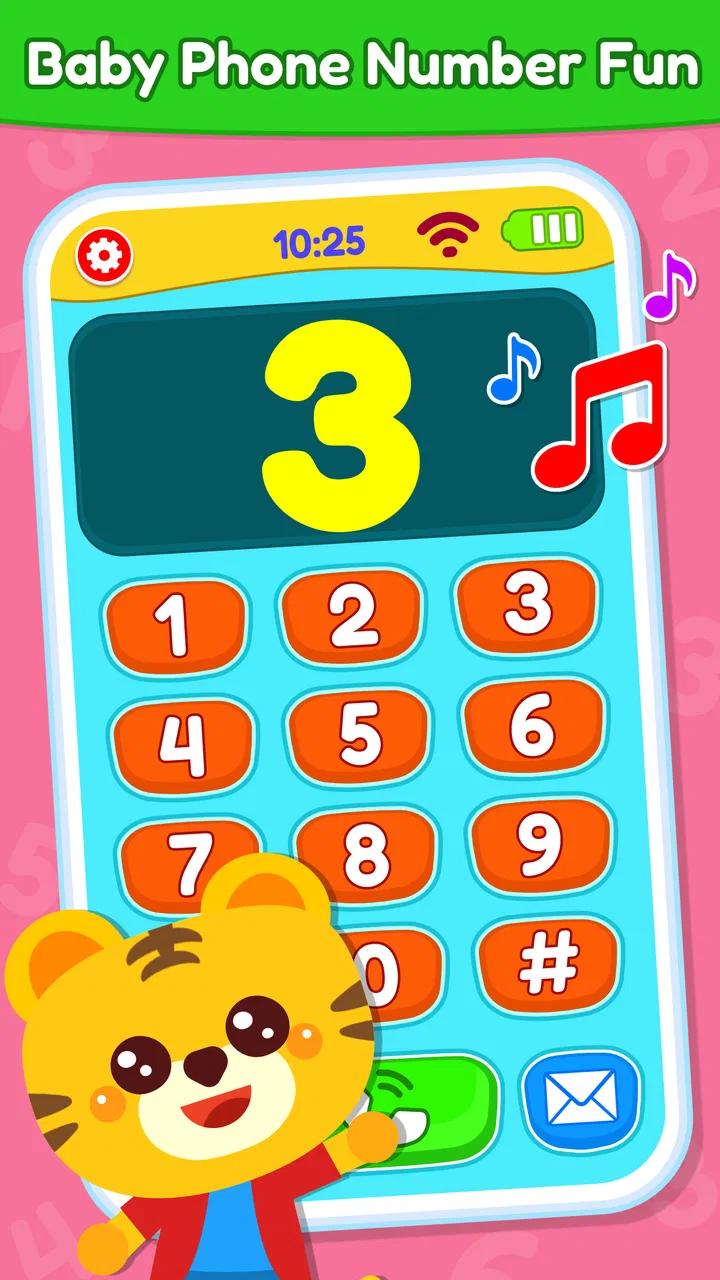
The strongest starting point is the phone idea itself. Toddlers already see adults holding phones, pressing buttons, and reacting to sounds, so a child can understand the basic invitation quickly. Rather than asking the child to learn an unfamiliar game rule, the app uses a pretend object that already exists in everyday life. That makes the first tap feel natural, especially for a child who likes copying a parent.
I would introduce it by sitting beside the child and asking what they think the phone is for. Let them touch before explaining. This gives the activity a small discovery phase and helps reveal whether the child is interested in the sounds, the visual controls, or simply the idea of imitating an adult. If a child is still developing hand control, the phone-style layout also makes isolated touches feel purposeful instead of like random screen presses.
The educational value is modest but practical. The app can support recognition, listening, turn-taking, and the connection between an action and a result. It should not be treated as a lesson that automatically teaches these skills. A toddler may tap repeatedly without noticing any learning pattern, so an adult can make the connection clearer by saying, “You pressed it, and it answered,” or by inviting the child to repeat one action slowly.
That small pause is important. If the adult immediately encourages frantic tapping, the game becomes a noise-making toy. If the adult allows a moment between touches, the child has more opportunity to notice what changed. I found that the most useful approach was to alternate between free exploration and tiny prompts: press once, listen, name what happened, then let the child choose the next move.
Feedback keeps the first minutes moving
The loop depends on quick feedback. A toddler is unlikely to wait through a complicated menu or a delayed reward, so the appeal comes from the sense that each touch matters. The child performs an action, something responds, and that response encourages another attempt. This is the right rhythm for a short early-learning game because it avoids demanding reading skills or a long attention span.
The feedback also gives parents a way to observe how a child approaches a screen. Some children test one control carefully, while others sweep across everything. That difference is useful information. A careful child may enjoy being asked to predict what will happen next. A more impulsive child may benefit from a simple “one press, then listen” routine that turns the same game into practice for waiting and noticing.
I would not expect the feedback to hold every child for a long sitting. The phone concept is instantly understandable, but instant understanding can also shorten the discovery period. Once a child has learned that tapping produces a response, the next session may need a new social angle. Try pretending that the child is calling a family member, asking them to make a sound for the phone, or taking turns with a parent. These additions come from how the game can be used, not from a promise that the app itself provides a full role-play system.
One useful habit is to keep the device at a comfortable angle and watch the child’s hand rather than focusing only on the screen. If the child is pressing with a whole palm, do not turn the moment into a correction exercise. Instead, model a single finger and let them copy when ready. The game works best as a low-pressure setting for practice, not as a test of accuracy.
The reward is repetition, not progression
Here, reward means the immediate satisfaction of causing a response. There is no need to frame success as winning. For a toddler, the enjoyable part is often the tiny surprise after a touch and the chance to make it happen again. That makes the game approachable for children who are not ready for puzzles, reading tasks, or games with explicit goals.
This is also where parents should set expectations. A pretend phone can encourage exploration, but it does not automatically provide the depth of a structured learning app. If your priority is letter formation, counting practice, phonics, or carefully staged lessons, a dedicated preschool app will probably be a better fit. This game is more suitable when you want a simple interactive object that can sit beside conversation and imitation.
I especially like the possibility of using it during a short transition. For example, while waiting for an appointment, a parent could offer a brief turn, then ask the child to put the phone away and describe what they did. At home, it could become a five-minute activity before moving to a book or a real-world pretend-play game. The reward is then not endless screen time; it is a small bridge into another activity.
There is a trade-off with the free model. The game costs nothing to start, but optional in-app purchases are listed at $1.99 per item. That makes trying it relatively easy, while still giving families a reason to check the purchase settings before handing over the device. I would keep purchases protected and make the child’s play area separate from any decision about buying extras. A toddler should not be able to turn a tap into an accidental transaction.
Resetting the session prevents the loop from becoming aimless
A good toddler activity needs a natural stopping point, even when the child would happily continue tapping. With this kind of game, the reset is less about completing a level and more about the adult deciding when the interaction has done enough. Once the child starts repeating the same action without listening or looking, I would treat that as a signal to pause rather than a reason to search for more stimulation.
My preferred reset is simple: finish one last turn, name the action, and move away from the screen. “One more press, then the phone rests” gives the child a predictable ending. After that, the same theme can continue away from the app. A toy phone, a conversation about calling someone, or a pretend message can preserve the imaginative element without requiring another screen session.
This approach also helps answer a common concern about toddler games: whether a child will ask for it repeatedly. The answer depends less on the app alone than on how it is presented. If it is always available as an unrestricted distraction, the loop can become repetitive and difficult to end. If it is used as a short, supervised invitation with a clear finish, the child is more likely to understand that the activity has a beginning and an end.
The current version is 2.3, and the game supports devices running Android 7.1 or later. That makes it relevant for families using an older compatible Android phone or tablet rather than requiring a recent device. I would still test it on the actual device before planning a child’s activity, because the experience of a toddler game depends heavily on screen size, touch response, speaker volume, and whether the device is comfortable for small hands.
What a realistic session looks like
Imagine a parent preparing dinner while a toddler wants to copy the phone calls happening around the kitchen. Instead of giving the child an unlocked personal phone, the parent opens this game, sits nearby for the first few minutes, and invites the child to make one call-like action at a time. The child taps, hears the response, laughs, and tries again. The parent then asks, “Who are you calling?” and gives the child a chance to answer in their own way.
After several turns, the parent changes the task: press once, wait, then hand the device back. That adds a little turn-taking without making the activity feel like a lesson. When attention drops, the parent ends with a familiar phrase and moves to a real toy or picture book. In that scenario, the app has done its job. It has provided a controllable object, a quick response, and a reason to interact, but the meaningful learning has come from the adult-child exchange around it.
For independent use, I would be more cautious. A child who can already navigate menus may manage the basic interaction, but a very young toddler may press unpredictably, change the device position, or lose interest quickly. The game is better as a supervised option than as a guaranteed way to occupy a child while an adult is unavailable.
Where it fits among toddler alternatives
Compared with a real phone, this game offers a safer pretend-play context because the child is not being given access to calls, messages, contacts, or a parent’s personal information. That is its clearest everyday advantage. It also avoids the pressure of a competitive game, where a child can become frustrated by losing or failing a timed challenge.
Compared with a physical toy phone, the app is easier to carry and can be ready on a device already in the home. A physical toy may nevertheless be better for children who need tactile buttons, movement, and less screen exposure. It can also support longer imaginative play without the temptation to switch to another app. If your child enjoys pressing real controls and carrying objects around, the physical alternative may feel richer.
Compared with structured educational apps, this title is lighter and less demanding. That is useful for a child who is just beginning to explore touchscreens, but it is a limitation for parents looking for measurable progress through lessons. A structured app is the better choice when you want a sequence of activities, a focused skill target, or a more substantial learning path. This one works best at the introductory end of the spectrum.
The rating of 3.7 from roughly three hundred eighty ratings reinforces that middle-ground impression. Families may find the concept appealing without considering it a complete experience. I would not choose it because of the rating alone; I would choose it because the pretend-phone format matches a specific moment in a child’s development and a parent’s routine.
Small details that change how useful it feels
First, use the app to practice waiting, not only tapping. The obvious play pattern is touch and repeat, but inserting a short pause makes the feedback easier to notice and gives the child a chance to anticipate the response. This turns a repetitive action into a simple exercise in attention.
Second, connect the digital action to an offline object. Put a toy phone, stuffed animal, or family photo nearby and let the child pretend to call it after using the app. This creates a transition from screen imitation to symbolic play, which is more valuable than allowing the phone screen to remain the entire activity.
Third, use the child’s behavior to decide whether to continue. If they are looking at the screen, listening, and choosing actions, another short turn may be worthwhile. If they are only striking the screen or becoming upset when the device is removed, the reward has stopped being useful. Ending at that point protects the routine and prevents the app from becoming a battle.
Fourth, keep the purchase boundary outside the child’s play. Since optional items cost $1.99 each, I would review the device’s purchase protections before the first session. That is not a criticism of the core idea, but it is a practical step for any free children’s game with paid extras. The child’s job should be exploring the pretend phone, not navigating an adult purchase decision.
Who should try it, and who should skip it
I would recommend it to parents of toddlers who enjoy copying phone behavior, need a very simple introduction to touch interaction, or want a short educational-style activity that does not depend on reading. It can also suit grandparents and caregivers looking for an easy shared game with an obvious starting point. The Everyone age rating makes the intended audience broad, but the real fit depends on the child’s motor control, attention, and interest in pretend play.
I would skip it if you want deep instruction, a long-term progression system, or a screen-free toy. I would also look elsewhere if your child becomes overstimulated by quick feedback or already finds basic tap-and-response games boring. In those cases, a physical phone toy, a book-based activity, or a more focused educational app may offer better value.
Midwin Games has kept the concept accessible, and the free entry point makes it easy to test without committing money at the start. Still, accessibility should not be confused with unlimited usefulness. The game is a small tool for a particular kind of play. Its success depends on whether the child enjoys the pretend-phone idea and whether the adult gives the interaction enough structure to remain meaningful.
My verdict on the action-feedback-reward-reset loop
After looking at the full cycle, I see a clear strength: the first action is obvious, the response arrives quickly, the reward is understandable to a toddler, and the session can be reset without needing a complicated achievement system. That makes the game approachable and easy to fit into a short routine. It is especially effective when a parent turns each tap into a chance to listen, imitate, wait, or talk.
The weakness is equally clear. The same simplicity that makes the first session welcoming can make later sessions feel shallow. The app does not replace physical pretend play or a carefully designed learning course. Its best use is as a brief, supervised activity that opens the door to conversation rather than as a digital babysitter.
My recommendation is to treat this as a small learning-and-imagination prompt, not a complete toddler curriculum. If your child is fascinated by phones and you want a free Android game that offers immediate cause and effect, it is worth trying. Start together, keep the session short, protect in-app purchases, and move naturally from the screen to real-world play. Used that way, the loop has a sensible reason to begin again: not simply to produce more taps, but to give the child another chance to notice, pretend, and share the moment with you.
FAQs for Toddler Baby Phone Games kids
01What age group is Toddler Baby Phone Games designed for?
Toddler Baby Phone Games is specifically designed for children aged 1 to 5 years. The app offers a variety of engaging and educational activities that cater to young kids’ learning needs, helping them develop essential skills such as counting, recognizing shapes and colors, and improving hand-eye coordination in a fun and interactive way.
02Is Toddler Baby Phone Games available on both Android and iOS?
Yes, Toddler Baby Phone Games is available for download on both Android and iOS platforms. You can easily find it on the Google Play Store for Android devices and the Apple App Store for iOS devices, ensuring accessibility for a wide range of users across different mobile devices.
03Does Toddler Baby Phone Games require an internet connection?
No, Toddler Baby Phone Games does not require an internet connection to function. Once downloaded, all the games and activities are accessible offline. This feature makes it an excellent option for keeping children entertained and engaged during travel or in areas with limited internet access.
04Are there any in-app purchases or ads in Toddler Baby Phone Games?
Toddler Baby Phone Games offers a premium, ad-free experience with a one-time purchase option. However, the free version of the app may contain ads and optional in-app purchases that unlock additional content. Parents can choose the option that best fits their budget and preferences for their children’s playtime.
05What educational benefits does Toddler Baby Phone Games offer?
Toddler Baby Phone Games provides numerous educational benefits, including enhancing cognitive skills, improving language development, and fostering creativity through interactive activities. The games are designed to teach basic concepts like numbers, letters, and shapes, while also encouraging problem-solving and critical thinking skills in a playful manner.
Pros
- Engaging and colorful graphics.
- Simple interface for young children.
- Educational mini-games included.
- No in-app purchases required.
- Offline play available.
Cons
- Limited variety of games.
- Repetitive sound effects.
- Ads can be distracting.
- Requires frequent updates.
- Not suitable for older kids.

Toddler Baby Phone Games kids
Gallery